Tea Brewing as a Form of Meditation
There is a small ceramic teapot on my counter — chipped on one handle, a soft sage green — and most mornings it teaches me how to wait.
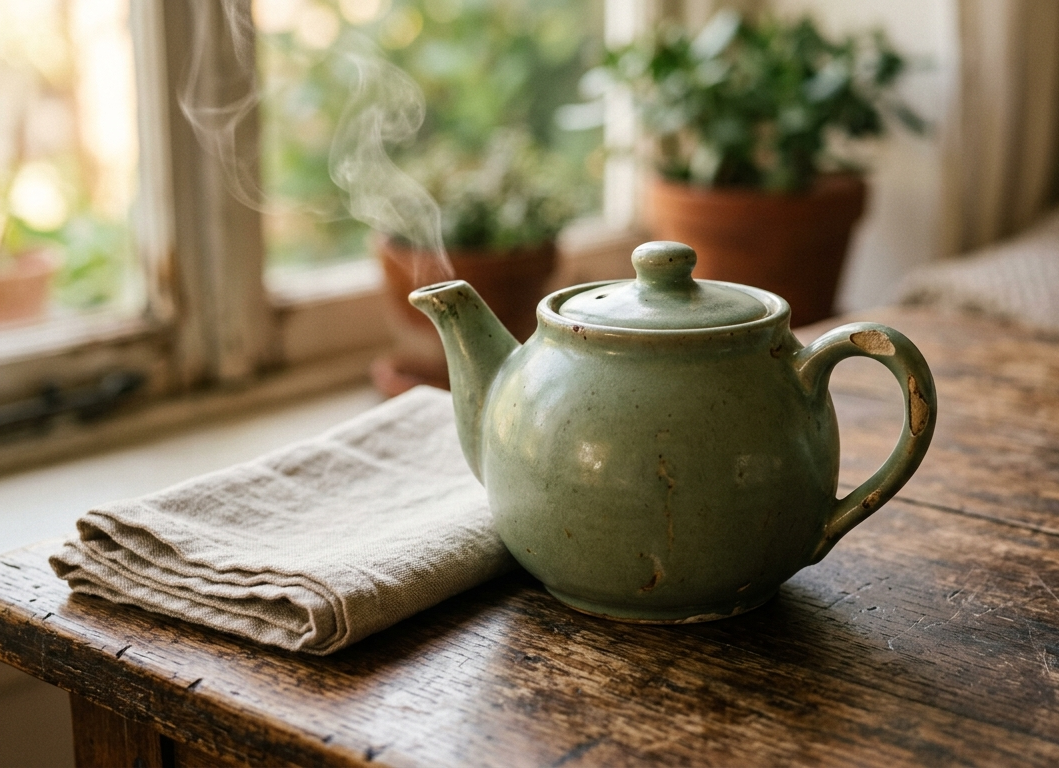
I came to tea late. For most of my twenties I was a fast-coffee person, the kind who poured the cup while still reading email, who measured a morning in completed tasks rather than degrees of attention. Tea, when I finally tried it as a daily practice, felt strange — almost frustrating. It refused to be hurried. The water has to boil, then cool, then steep. The leaves answer in their own time.
That refusal, it turned out, was the point.
Why a small teapot can quiet a morning
Harvard’s mind-body publications have long described tea preparation as one of the more accessible doorways into mindfulness practice. WHO specialists writing on contemplative habits make a similar observation: the activities that demand a few minutes of full attention — without giving you anything to scroll, swipe, or click — are quietly some of the most restorative.
Brewing tea is not a workout for the body. It is a workout for attention. You stand near the kettle. You watch the water rise. You smell the leaves changing. None of it can be rushed without losing the cup.
“Tea is the art of agreeing to wait.”— a small line I found in a secondhand bookshop in Montreal
The ritual, in plain steps
This is not a tea ceremony. I am not a tea master, and I am not pretending to be one. This is a small kitchen practice that takes about eight minutes. It is the version of “meditation” that finally fit my life.
- Choose the leaves while the kettle fills. One specific tin, one specific morning. Let it be a decision, not a default.
- Watch the kettle. Yes, really. No phone. No book. This is the meditation. Listen to the change in the sound.
- Warm the pot first. A small pour, swirled, then poured away. It steadies the temperature and steadies you.
- Measure the leaves with your fingers. A spoon also works. Fingers are better. They learn the weight.
- Steep, and stand still. Three minutes. Look out the window. Notice three things you can see.
- Pour slowly, into one cup. Not two. Not “for later.” This cup, this morning.
Field notes from two winters of tea
The first month I kept reaching for my phone during the three-minute steep. My fingers had a habit my mind did not yet share. I had to physically place the phone in a drawer in the next room. Within a week, the reaching stopped.
- Keep one teapot for this practice. A specific object holds a specific intention.
- Do not collect teas. Buy one tin, finish it, then choose the next.
- The “three things at the window” is more important than it sounds. Skip it and the practice flattens.
- Drink the cup before it cools. The whole exercise was about being present; cold tea suggests the moment slipped away.
For a week, replace one cup of coffee with one cup of tea — not for any wellness reason, but for the chance to stand still in a kitchen for eight minutes a day. Notice if anything changes in the texture of your mornings.
What the small green pot has given back
I would not call this meditation in any formal sense. I have never sat cross-legged on a cushion for an hour. I have, however, learned to stand at a counter for eight minutes and simply be in a kitchen. In my experience that is closer to the spirit of the practice than most apps I have tried.
The pot has taught me the difference between waiting impatiently and waiting on purpose. Most days, that distinction is the whole gift.
Frequently asked
What kind of tea should I start with?
Whatever is already in your cupboard. A daily black, a soft green, a chamomile in the evening. The tea is not the point; the standing still is.
Do I need a special teapot?
No. A mug with an infuser works. The constant is the ritual, not the equipment.
What if I cannot stand still for three minutes?
Then this is exactly the practice you needed. Begin with one minute. Standing still is a skill that returns when invited.
Can I drink coffee and also do this?
Of course. I still drink coffee. Tea simply earned a separate slot in the morning — a slower one, on purpose.
Read also
Planning your day over morning coffee
Three lines while the kettle steams.
Short yoga for your back
Six gentle shapes before the laptop opens.
10-minute bed stretches
The kindest way I know to begin a day.
Slow morning letters
A short, calm note every other Friday — journal entries, slow rituals, and one quiet idea you can try this weekend.